At the close of the Civil War, almost all Black people were illiterate. There were few schools for white people and none for Black people. Southern states faced with the problem of integrating Black people, began to legislate to make makeshift benefits that resulted in Jim Crow and segregation laws.
During Reconstruction, white people did not want a vertical segregation, therefore, it grew laterally. This would allow for white people to remain at the top of the ladder in all areas of life. They would gain this role of supremacy and have complete control of education and educational opportunities.
I grew up in poverty in the segregated South. My maternal grandparents lived in Mississippi and did not receive schooling beyond the third grade. My paternal grandparents migrated to Chicago and passed away when my Dad was a teen. He was the youngest of 10 boys. He and his brothers attended high school. My mother was the oldest of 10 children. She and her siblings never received an education beyond the sixth grade. They had to work in cotton fields.
I was the youngest of five children and we attended segregated schools. Our older cousin whom we affectionately called “Fessor,” was present in our lives. He was Dad’s cousin. He grew up in Memphis and after graduation; he had an opportunity to attend Howard University (a HBCU in Washington, D.C.). After graduation, he attended and graduated from law school, also at Howard. After passing the bar, instead of practicing law, he chose to teach history in the Memphis school system. He was known as “Professor,” but we shortened it to “Fessor.” He eventually wrote a book entitled, “The Torch Glows” and gave us copies. As a child, I did not appreciate the wealth of information in his book but always looked forward to his encouraging visits.
My siblings and I graduated from high school in Memphis. My older siblings were good students and participated in extracurricular activities. After graduation, they were rejected from predominately white institutions in the South. Our eldest brother lived with Cousin Fessor from 10th grade to graduation. Racists made threats against his life for going to school instead of working in their cotton fields. He was president of his student class, class salutatorian, and student council president. After rejections from local predominately white institutions, he was awarded an academic scholarship to DePaul University in Chicago.
Our next oldest sibling attended Owen College (HBCU in Memphis), before it merged with Lemoyne College (another HBCU in Memphis). Prior to graduating, he was drafted and served in the military. After discharge, he moved to Washington, D.C. Our sister attended Griggs Business College in Memphis and after graduating, worked at Lane College (HBCU in Jackson, Tennessee). Our brother a few years older than me chose not to attend college. He was interested in trade schools. He served in the Air Force and worked as an airplane mechanic.
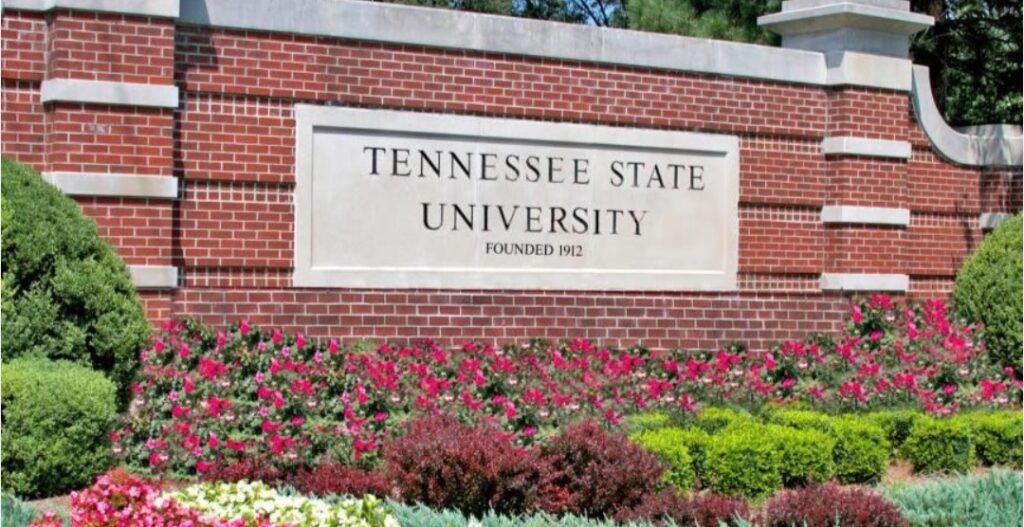
When I graduated from high school in 1971, some Predominately White Institutions (PWIs) were admitting Black students as required by Title VI of the 1964 Civil Rights Act. Reportedly, there was racial tension on college campuses. A few of my classmates went to PWIs. After graduating from high school with honors, I received a partial academic scholarship to Tennessee State University (HBCU in Nashville). Even though I was 200 miles from home, I felt a strong sense of belonging and community. The instructors and administrators ensured I had a successful career path. I also met some life-long friends there. Eventually, I obtained two more degrees from PWI’s, but I was older and didn’t live on campus.
There are many people who don’t know the history of HBCUs. They were established to educate Black Americans who were largely denied admission to mainstream institutions due to racial segregation and discrimination. They emerged after the Civil War and were supported by Morrill Land-Grant Acts, which mandated educational alternatives for Black students. They were supported by Black churches, Northern missionaries, and the Freedman’s Bureau.
The phrase HBCU was coined by the Higher Education Act of 1965 to define institutions establish institutions established before the Civil Rights Act of 1964. It remains crucial for providing accessibility to higher education, and a supportive environment to Black students. Many students grew up in poverty, like me, and are first generation.
One of my favorite authors is W.E.B. Du Bois. In 1888, Du Bois graduated from Fisk University, a Historically Black College or University (HBCU) in Nashville. He taught school during the summer to support his studies. This was his first experience with Southern racism which consisted of Jim Crow laws, bigotry, lynchings, and voter suppression. After graduation, he attended Harvard College and graduated with a second bachelor’s degree in history. Harvard did not accept his credits from Fisk. He received a scholarship to attend graduate school at Harvard and majored in sociology.
In 1892, he received a fellowship to attend the University of Berlin for graduate work. He traveled extensively throughout Europe and studied with some of the most prominent social scientists. During his time in Germany, he found himself outside the American world, looking in. He was regarded as a man, instead of a curiosity. After returning from Europe, in 1895, he obtained a Ph. D. from Harvard University and was the first Black graduate.
Recently, I came across Cousin Fessor’s book. It was gathering dust on my bookshelf. Cousin Fessor had passed away years ago, but he left a written legacy. His book is a1966 educational study about segregation in the public school system. He wrote, “Education is a basic principle of democracy and democracy is a principle of education.” He wrote about the importance of good teachers in the classroom. He had a passion for law and teaching!
References
Du Bois, W.E. B. 1994. The Souls Of Black Folk. Reprinted from 1903 edition by A.C. McClurg and Co., Chicago, IL. 1994 edition. Mineola, N.Y., Dover Publications, Inc.
Moseley, Clifton L. 1966. The Torch Glows. New York, New York. Carlton Press, Inc.
Wikipedia. Historically Black Colleges and Universities. Web. Accessed October 5, 2025.