I blog and write about my life growing up in poverty to encourage and empower others. My parents, four older siblings, and I lived in abject poverty in the segregated South. Our poverty was the direct result of systemic discrimination. Our parents lacked access to gainful employment, and we lacked access to healthcare. When the Medicare and Medicaid Act of 1965 were passed, we received Medicaid. Dad served in the military during WWII, received an honorable discharge, but was denied military benefits.
We lived in shacks without electricity or indoor plumbing. The tin roof tried its best to protect us from the rain. The pot-bellied stove in the middle of the room struggled to keep us warm during the cold winters. We read by the light of a dimly lit coal oil lamp. In spite of our circumstances, our Christian parents supported and encouraged us. We were raised to have strong core values, principles, and goals.
Our mother (MaDear), grew up on a farm in North Mississippi. She was the oldest of 10 children. Her parents were tenant farmers but only received a third grade education. She and her siblings only received a sixth grade education. During those times, Black students were expected to work in the field.
Our father (Dad) was born in North Mississippi but moved with his parents to Chicago when he was a child. He was the youngest of 10 children, all boys. His mother was European and Native American, therefore, when they married, they had to leave the South. He attended historic Wendell Phillips High School and knew the value of education. He moved back to Mississippi as an adult. He was in search of a Southern wife.
After marriage, our parents lived in Mississippi and helped on our maternal grandparent’s farm. They lived in Mississippi until my fourth older sibling was six weeks old. When it became evident that Black children were not expected to attend school beyond sixth grade, our parents moved to Memphis, Tennessee. I was born at the charity hospital in Memphis. My siblings were born at home and delivered by ladies in the community with experience delivering babies. They were called midwives but didn’t have medical training.
Education for children was compulsory in Tennessee. Initially Dad obtained employment at the Army Depot. He took the Civil Service Examination and earned a cumulative score of 97. Because he served in the military, he received credit for five points. His goal was to save money and buy a home for his wife and children. Then, one day it happened. He lost his job because a white man needed it. Afterwards, Dad was rejected from each job he applied for. We moved from shack to shack in the suburbs of Memphis so my parents could sharecrop. This worked until our eldest sibling’s life was threatened by the white owner of the shack we lived in. The owner told him to the cotton field, but he went to school. He knew Tennessee had a compulsory school law. He was fifteen years old. Since the owner was also the town constable, our parents made a decision for our brother to live an older cousin who was also a teacher. Before this plan was detected by the landowner, we moved under the cover of darkness.
Eventually, our parents decided to move from Memphis to a military town approximately 20 miles north. This town had a large naval base and better opportunities. We still lived in a shack, but it had more rooms. Even though there were elementary, junior high and high schools in the town, we had to ride the school bus 16 miles roundtrip to the Black school. Most of the students were poor or low income. The principals, teachers, and staff at the school believed in excellence and believed we could succeed.
Our parents believed in education, and we were expected to achieve. That we did! We all graduated and attended college, business school, or trade school. Our eldest sibling, the one whose life was threatened, was awarded an academic scholarship to DePaul University in Chicago.
Finally, Dad was hired as a janitor at the naval base. We didn’t own a vehicle, so he rode the city bus. When they were old enough, my older siblings also worked there part-time. After three older siblings graduated from high school, our parents moved back to Memphis. Due to white flight, we lived in a housing project that was initially built for white people. Because of redlining and discriminatory housing policies favoring them, they were able to buy homes. I was almost 15 years old and entering my sophomore year of high school. My brother was entering his senior year of high school. This was the first time we lived in a house with electricity and indoor plumbing. We had our own bedrooms, a telephone, and a television. Our eldest brother was working Chicago, the next oldest brother was in the Army, and our sister was married.
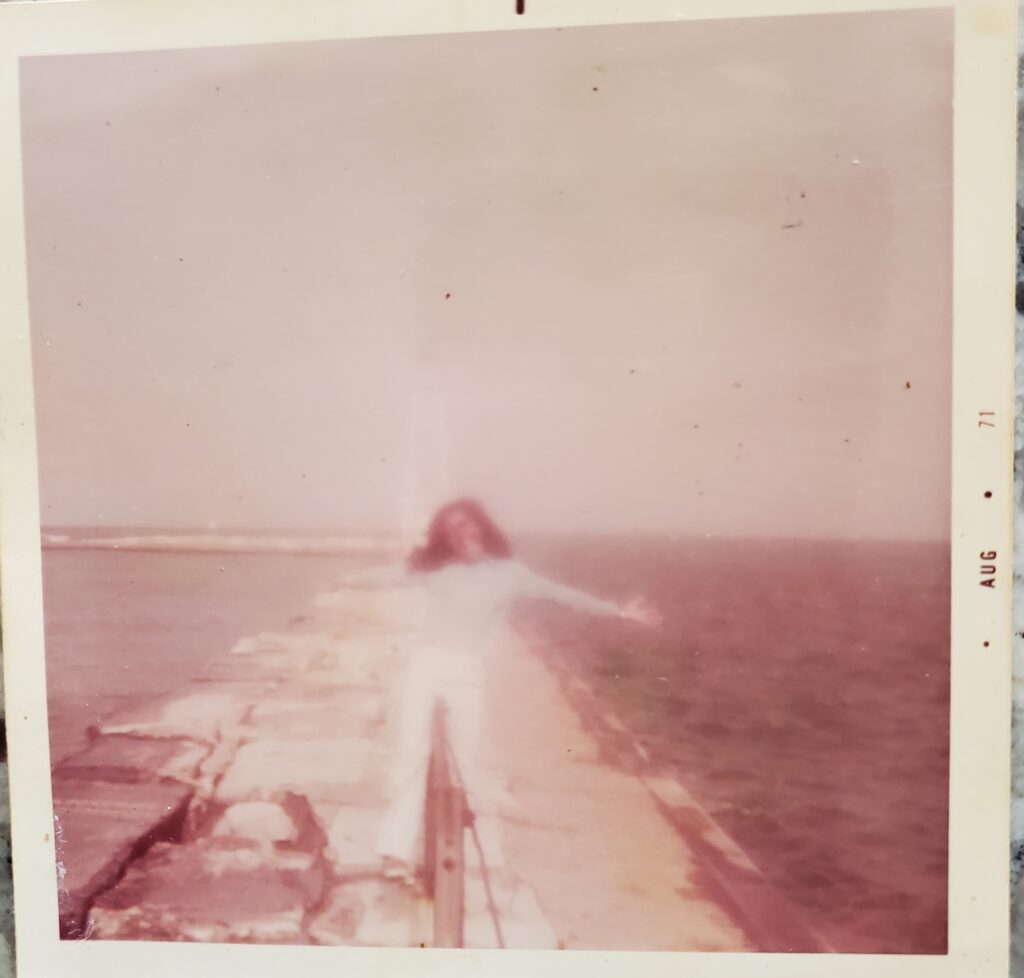
After I graduated from high school with honors in 1971, I traveled out of the South for the first time in my 17 years. My Dad, sister, and her husband took me to Chicago. We huddled together in their Volkswagen Beetle for the nearly eight hour drive. I was excited to see cousins and our eldest brother and his new family!
After touring Chicago, I could hardly believe there was life beyond the shacks we grew up in. In spite of discriminatory practices, our Christian parents believed there was a better life for us. They stayed the course, planned together, and remained together for 43 years. They and my siblings are now deceased, but I know they are still encouraging me.
After marrying and later divorcing, I raised two daughters the way my parents raised me. They are now married with families of their own.
I’m retired after working 43 years and have the travel bug. I’ve traveled across the United States and to other countries. It’s great to experience life with other like -minded wanderlusts. Many are surprised I grew up in poverty. Stay the course. There is life beyond the shack!
Francie Mae. November 22, 2025.