For the first 18 years of my life, I lived in abject poverty. I grew up in a two parent household with four older siblings. We only traveled outside our state of Tennessee, to see our mother’s family in Mississippi. After I graduated from high school, Dad, my sister, and her husband went to Chicago to visit Dad’s family. We were cramped in that little Volkswagen Beetle, but it was worth the trip!
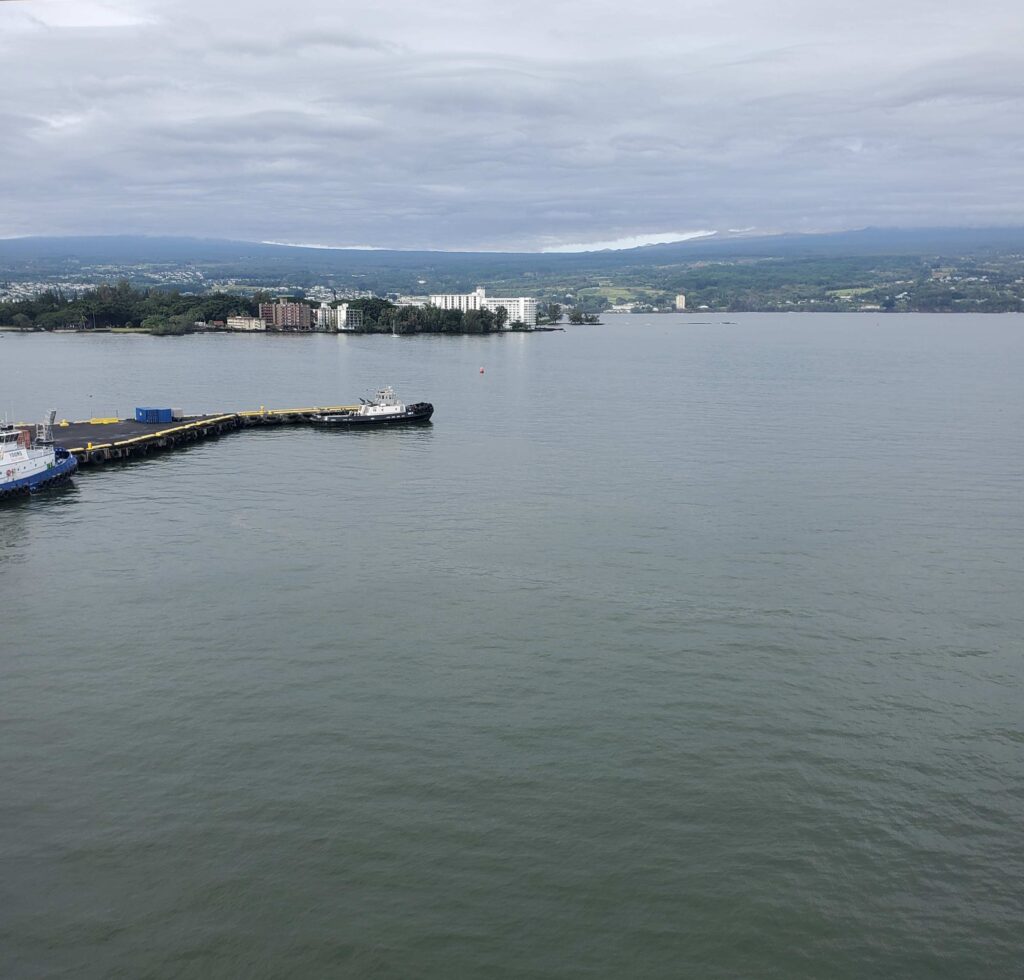
This month, I joined 61 other wanderlusts for a trip to Hawaii, the place referred to as God’s wonder.
Hawaii is a sensory paradise, a place where your five senses will be awakened! It’s also the place where Japan launched a surprise military strike on the United States Pacific Fleet at its naval base at Pearl Harbor on Oahu, Hawaii on December 7, 1941. We visited Pearl Harbor on our first day there. No bags except a clear plastic bag are allowed inside. A bag storage facility is available for a fee. After watching a brief film, we took tender boats to the USS Arizona and paid our respects to the sailors and Marines killed. The sunken USS Arizona continues to leak oil known as “Black Tears.” It was a sombering experience.
The attack on Pearl Harbor was preceded by months of negotiations between the U.S. and Japan over the future of the Pacific. The air raid on Pearl Harbor resulted in the United States declaring war on Japan the next day. Of the eight U.S. battleships present, all were damaged and four were sunk. All but the Arizona were later raised and six were returned to service during the war. A total of 2,403 Americans were killed and 1,178 others were wounded. President Franklin D. Roosevelt labeled December 7, 1941 as a date which will live in infamy.
Afterwards, we embarked on our ship. That night, we were greeted by heavy rain and high wind. The rhythmic white capped ocean waves rocked the ship. We were told this was the most rain to visit Hawaii in years. Excursions were cancelled but the activities director had planned many onboard activities.
Over the next few days, we saw beautiful landscapes, rainbows, and vibrant sunsets. We heard the rustle of palm trees and birds singing in perfect harmony. The sweet smell of native flowers traveled with us when we visited different islands. We danced with Polynesian dancers’ onboard ship and at the festive Luau.
We enjoyed fresh seafood, savored the taste of tropical fruits, went on breathtaking excursions, and learned about the history and culture of the islands. A few friends and I went on an excursion to Volcanic National Park. Blowholes can be seen along Hawaii’s coastline. They are natural wonders form by lava tubes and created by ancient volcanic activity. It’s a geyser like effect that shoots water up to 30 feet in the air.
Breathtaking Waimea Canyon is a deeply colored gorge with scenic lookouts. It’s referred to as Hawaii’s Grand Canyon and is10 miles long and over 3,000 feet deep. It contains volcanic rock and lush tropical vegetation.
Hawaii has an abundance of feral chickens. Major hurricanes in 1982 and 1992, destroyed coops and allowed them to escape. They interbred with red jungle fowl. They’re mostly on the island of Kauai because it lacks predators like the mongoose that helps control chicken populations elsewhere.
We saw sea turtles and monk seals basking in the warm sand by the ocean. They are protected under federal and state laws and are not to be disturbed. Violations can result fines or potential jail time.
The poverty rate in Hawaii is around 8.8 to 11.8 percent in some areas. The income is average, but the cost of living is high. The state has one of the highest unhoused/unsheltered rates in the U.S. The beaches are public; therefore, it is not unusual to see unhoused people living there.
Honolulu’s economy is struggling due to high inflation. It’s one of the most expensive cities in the United States. Businesses are facing impacts from renewed federal tariffs. There’s a lack of high paying jobs. Many residents have to work multiple jobs. The cost of a small home is round 350 thousand. Approximately 44% of households are classified as ALICE (Assets Limited, Income Constrained, Employed but Struggles). Farmers have difficulty selling their products due to trade wars. There are dismal tourism numbers.
The new green tax for tourists helps prevent the natural environment from the impacts of climate change and environmental degradation. At the beginning of this year, 2026, visitors to Hawaii are charged a Transient Accommodation Tax (TAT) for overnight stays.
Last year, tourism was dismal. Hawaii is ranked amongst the worst states to do business due to high land and labor costs, complex regulations, and a lack of access to capital. Families are leaving the islands because their incomes are not keeping up with the economy.
Local residents say they usually stay on one island due to the economic impact. They can travel between islands by plane at a cost of $70.00. Depending on the island, the trip takes 25 to 45 minutes. Due to rough deep ocean channels, there is no regular public ferry system.
There’s a mandatory Biosecurity Declaration upon entering and leaving the island. Animals, plants and organisms (fresh fruit, bananas, and vegetables) are declared. All bags are screened for these items upon entering and leaving Hawaii.
When I was growing up in poverty, I felt left behind. We were left behind because of racist laws. Now, these places that are left behind share a common pattern. A dominant industry stops growing, productivity stalls and incomes become stagnant.
Francie Mae. February 21, 2026.
Reference
Business. “Insights: Is Hawai’i being left behind? “Website. KAUA’I NOW. February 20, 2026. Accessed February 21, 2026.