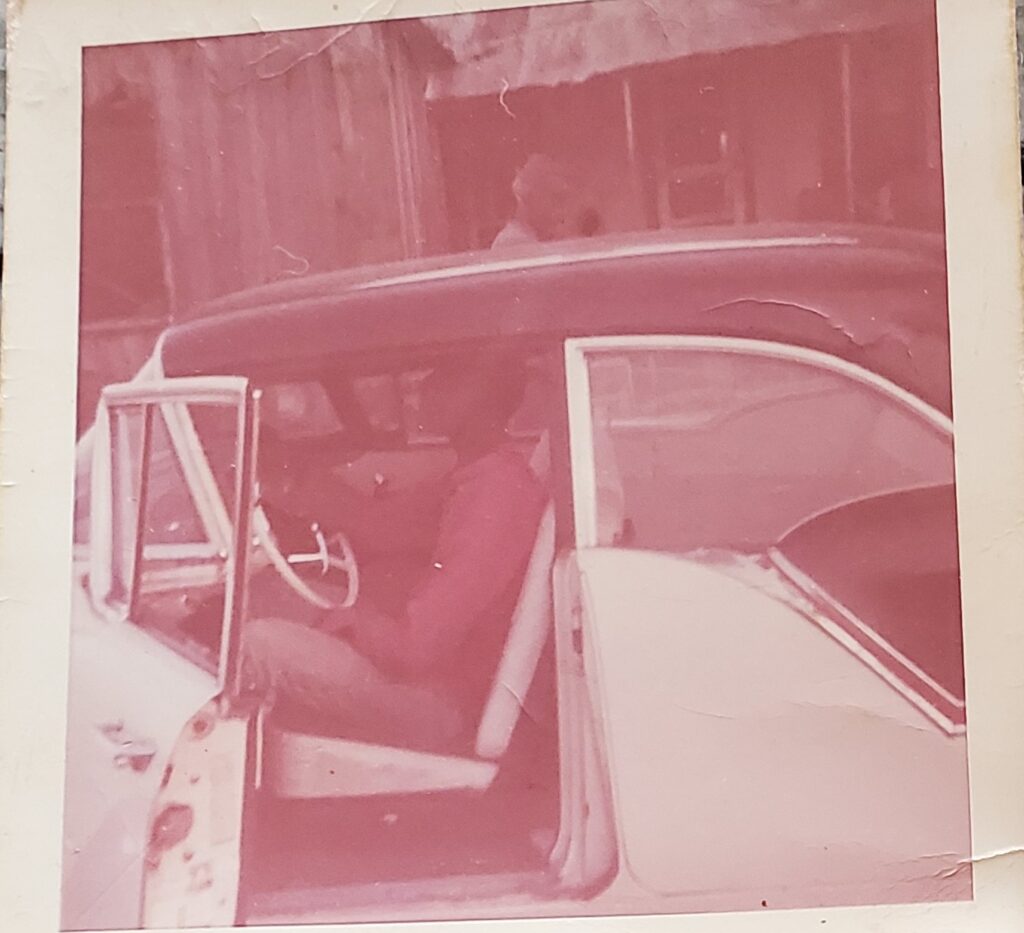
My story is a journey through poverty to hope. My family and I lived in absolute poverty in the richest country in the world. I grew up in the segregated South and lived in shacks until I was fourteen years old. Racist legal state and local laws called “Jim Crow” mandated the separation of races in public and private facilities, disenfranchised and marginalized Black people, and kept many Black people from obtaining meaningful employment.
I am the youngest of five children born to Christian parents. Our father served honorably during WWII, was injured in training, and denied G. I. benefits. After discharge, he was looking forward to providing a stable home for his wife and future children, but racist laws said otherwise. In spite of these laws, our parents provided us with the tools and skills we needed to get out and remain out of poverty. We didn’t have a poverty mindset. Because of federal legislation, the Civil Rights Act was passed in 1964 and the Voting Rights Act was passed in 1965. We learned the power of these acts and the necessity of voting.
As a little girl, I knew this way of living didn’t seem right. Thankfully, our parents provided us with the love and guidance we needed to navigate through a tough world. We didn’t have much, but we had each other! Friends, family, pastors, teachers, and other mentors were a bonus.
There were many struggles and hardships along the way. I learned to grow from these challenges. I was born in a segregated section of a charity hospital in Memphis. My older siblings were born in rural Mississippi. They were delivered at home by women in the community called midwives. These midwives did not have formal medical training. They learned from generational knowledge. When I was seven, our parents moved to a rural farming and military community on the outskirts of the city. This small city provided better long term opportunities.
Our shack was our home. We did not have electricity or indoor plumbing. We lived in the last of 10 shacks in a placed called “The Bottom.” We pumped water from a kind neighbor’s well and carried buckets of water home. We chopped wood to put in the old black potbellied stove that was used for warmth and cooking. Our father and brothers provided the majority of the manual labor, but my sister and I helped. Our father and brothers hunted rabbits in the fall and winter. Our mother, my sister, and I picked blackberries in the spring and fished in the summer. Some of our neighbors had fig, pear, apple, and peach trees on their property. On occasion, they shared their bounty with us.
Our mother scoured the worn plank floors with lye soap, heated water on stove, and learned to make creative meals. We chopped cotton during the summer for three dollars a day, and picked cotton in the fall. Our mother always saved money to put in church and bought seeds to grow a vegetable garden and beautiful l flowers. In spite of our circumstances, she wanted our shack to be surrounded by beauty. Eventually, our older sister helped her with the beautification project. This was the beginning of her love of fashion. She took Home Economics in high school and made beautiful outfits.
The outhouse was putrid in the summer and had to be rotated frequently. At night, we used a slop jar. We took turns bathing in a number 10 tub. Our brothers used the same water. When it was our turn, my sister and I used the same water. We used coal oil lamps to light the dark evenings and nights. We were expected to do well in school and studied our schoolwork by the dimly lit lamps.
We did not receive any type of government assistance. Many nights, I witnessed our father praying. He kneeled on one knee, put his hand on the bended knee, closed his eyes, and bowed his head. I didn’t want him to know I was invading his special time with God, so I was careful not to be seen. It was then that I realized he always had faith that God would deliver his family from our current situation.
Eventually, our father obtained employment as a janitor at the nearby Naval Air Station. When my two of my older siblings were teens, they worked in the laundry during the summer. The brother a few years older than me also chose to work as a shoe shiner on the base. That way, he received tips from the sailors and Marines. He learned auto mechanics in high school and with the extra money, he bought a used car.
Our eldest sibling was now living with a cousin because his life was threatened years earlier by a racist constable. The constable wanted him to work on his farm instead of attending school. He graduated from high school as the president of his senior class, president of the student council, and class salutatorian. He earned a music and academic scholarship to DePaul University in Chicago. Dad grew up in Chicago and still had many relatives there to help as needed.
My siblings were very talented. Our second oldest brother was voted most talented by his senior class. He was a gifted artist and saxophonist. We graduated from high school, attended trade school, business school, or college. Our three brothers served in the military. We were all delivered from poverty. Our parents were able to enjoy their later years in peace. God hears the prayers of the righteous.
My journey out of poverty started when I was a child living in poverty. I learned to observe, listen and ask questions. Poverty is not only lack of money; it’s a lack of hope. Our parents gave my siblings and me hope. I don’t believe they ever felt powerless to change their situation. They did not have a poverty mindset or mentality, and they gave this legacy to us. A poverty mentality limits your success and a poverty mindset is a belief system that you cannot rise above your current situation. Both attitudes lead to fear or refusal to invest in you.
As a child, I was curious. I was the one who always asked why? I was also a day dreamer, avid reader, advocate, caretaker, giver, animal lover and a fixer. I had a stubborn streak and was called “hardheaded” by my family. Things needed to make sense to me, and I was always looking to connect the dots. From a young age, I had an attitude of servitude. In my personal and professional life, I met so many people who were hurting due to poverty, and I yearned to make a difference. I didn’t know how to how to reach people globally to offer hope. I wrote and published memoirs about my life. I learned to blog and realized I can outreach more people by blogging excerpts from my journey.
After graduation from high school, I attended college and majored in nursing. I began my professional career working in a hospital serving the vulnerable and underserved population. While working at the VA Hospital as a psychiatric nurse, I had the pleasure of working with brave men and women who served our country. I was inspired to join the Army Reserve. After working in the hospital setting for twelve years, I ventured outside my comfort zone and obtained nursing positions in non-clinical settings. I was able to engage with more people and make a broader impact. Eventually, I worked for managed care companies that provided services to the vulnerable and underserved population. At these companies, I had a voice in empowering people, and implementing and managing programs for better health outcomes. I also had the opportunity to engage with a diverse group of people and learn about different life experiences. I found my passion. As an advocate for justice, I returned to school and obtained a Master’s degree in Health Law. I continued to grow professionally and began researching why the poverty cycle exists.
I witnessed and felt the sting of racism, injustice and inequality while growing up. Research indicates that Black Americans, Hispanics, and poor whites are more likely to live in poverty. For Black Americans, those who escape poverty are more prone to backslide to their former mindsets. This is due to oppressions that historically plague us, but we must be victorious. We must be aware of our history, but use this history to show we are conquerors.
I’m grateful our parents believed there was a better life for us. They never lost hope. I’m grateful for the civil right workers who fought so hard for justice and equality. After civil rights laws were passed, we had a responsibility to take advantage of the systemic barriers that were removed. After the voting rights laws were passed, we had a responsibility to have an equal say in government by voting.
My parents and siblings have passed, but I am carrying the torch for my children, grandchildren, and generations to come. We’re grateful for the opportunity to live life beyond the shack. In spite of our circumstances, our parents believed that God would provide and He did!
Francie Mae. October 25, 2025.