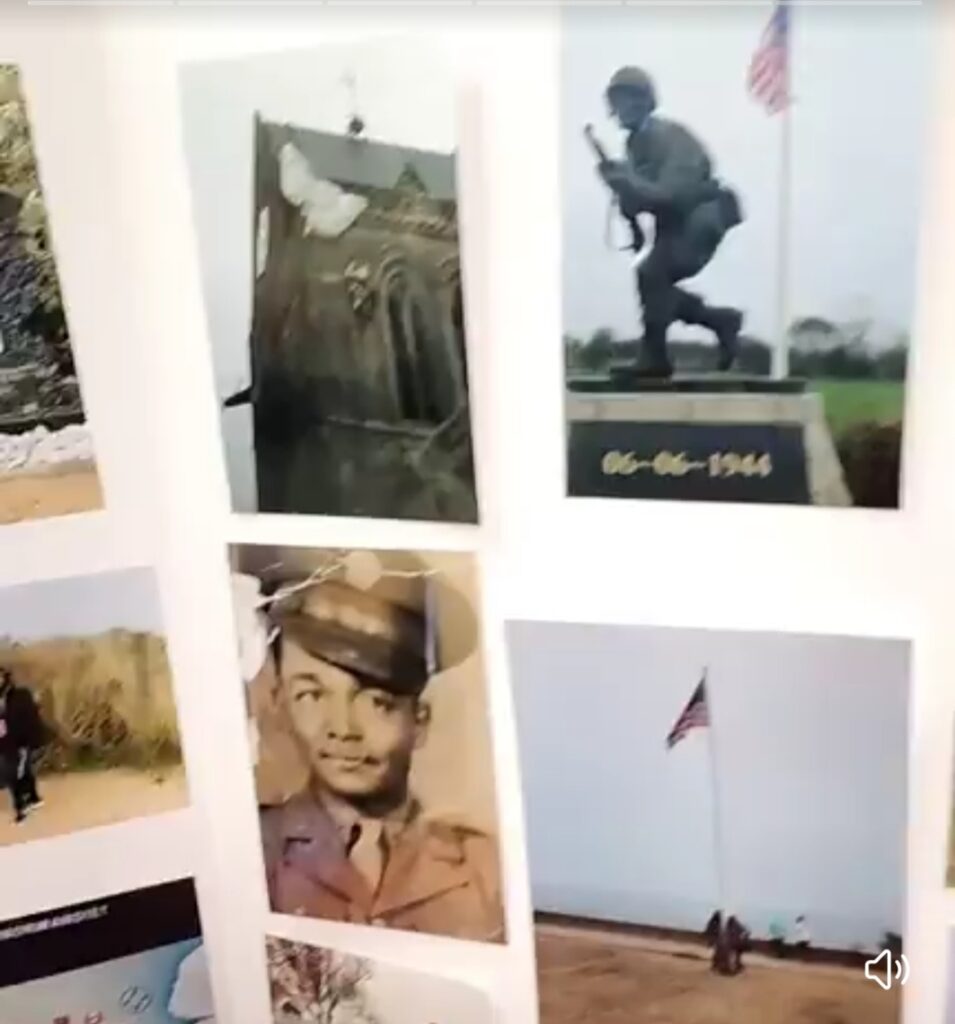
Today is Veterans Day. It began as Armistice Day on November 11, 1919, to commemorate the end of World War I (WWI). In 1938, it became a legal holiday dedicated to veterans of WWI. After World War II (WWII) and the Korean War, the name was changed to Veterans Day to honor all veterans. President Eisenhower signed the legislation in 1954. Today, it is a legal Federal holiday.
American effort during WWII saw the greatest mobilization of the U.S. Army, Navy, Marines and Air Force in the nation’s history. It is not to be confused with Memorial Day (the fourth Monday in May). Memorial Day honors American service members who died in service to their country. Veterans Day pays tribute to all American veterans, living or dead, but especially gives thanks to living veterans who served their country honorably during war or peacetime.
My father (Dad) and my mother’s (MaDear) brother, Uncle Ernest served during WWII. To my knowledge, they were the first members of our family to serve. After discharge, Uncle Ernest suffered from post- traumatic stress disorder). He went missing for many years and was later discovered in another state. During those times, military people who went missing were referred to as being “war affected” or “shell shocked.” Post -Traumatic Stress Disorder (PTSD) did not have a name, nor was it treated. Fortunately it now has a name and many treatment options are available.
After marrying MaDear, Dad had to leave for military service. He served in the Army, trained at Camp Shelby in Mississippi, and came home on furloughs. Afterwards, he was stationed at Fort Huachuca in Arizona. During training for overseas duty (France), he was injured and spent seven weeks in a military hospital. After discharge, he returned home to his wife and baby son. He wanted to buy a house for his new family but was denied G.I. benefits and service connection for his disability. In spite of a cumulative score of 97 on the Civil Service Examination, he was denied gainful employment.
He was living in Mississippi and had a wife and young son. President Roosevelt signed the Serviceman’s Readjustment Act into law on June 22, 1944. This Act included benefits for college, low cost home loans, and unemployment insurance. When lawmakers began drafting the G.I. Bill in 1944, some segregationists feared that Black veterans would use public sympathy for veterans to advocate against Jim Crow laws. They wanted to make sure the G.I. Bill benefited white people.
During the drafting of the G.I. bill, the chair of the House Veterans Committee, Rep. John Rankin, insisted that the program be administered by individual states instead of the federal government. He was a long-term congressman from Mississippi and used his power to support segregation. He was known to be an ardent segregationist and denied benefits to many Black veterans. As a result, Dad did not have access to any benefits. We lived in abject poverty.
Some veterans could not access G.I. benefits because they didn’t have an honorable discharge. A larger number of Black veterans were discharge dishonorably than their white counterparts. Sometimes, even if they qualified for benefits, they could not find schools to accept them.
Dad and MaDear made a decision to move from Mississippi to Tennessee after the birth of my 4th sibling. In Mississippi, Black children were expected to work in the cotton fields during cotton season. After completing the 6th grade, the landowners expected them to work and threatened their parents with eviction or mob violence if they refused. Tennessee had a compulsory school attendance law. Black children were not expected to work in the cotton fields during times school was in session. This didn’t prevent white land owners from trying to convince their parents to work in the cotton fields, but Dad knew the law.
My three late brothers and I served in the military and were honorably discharged. My late sister’s husband was in the Navy. The legacy of service continued with other family members. We joined the ranks of over 2 million Black veterans and over 15to 18 million veterans of all races in the United States.
On November 7, 2025, I was honored to write, direct, and produce our first Veterans Day Program for our local senior activity center. Over 100 people crowded into our small building to show appreciation and honor our veterans, reflect on the meaning of service, and support our community. We prayed together, sang together, danced together, rejoiced together, and broke bread together. We’re finally changing.
“In the face of impossible odds, people who love this country can change it.”-Barack Obama
Francie Mae. November 11, 2025.
References
Blakemore, Erin. “How the G.I. Bill’s Promise Was Denied to a Million Black WWII Veterans. The sweeping bill promised prosperity to veterans. So what didn’t Black Americans Benefit? ”Updated: April 20, 2021. Original: June 21, 2019. Accessed July 9, 2022.
National Call Center for Homeless Veterans-1-877-424-3838.
Veterans Crisis Line- 1-800-273-8255 and press (1). Support for hearing impaired- 1-800-799-4889.
Women Veterans Program Manager-1-855-829-6636.