Visiting West Africa was a life-long dream of mine. Three years ago, my daughter, my friend, and I made arrangements to travel to Ghana with a small travel group. Unfortunately the trip was canceled, and we were devastated. It felt like my dream was drying up like a grape shriveling up in the sun. I was crushed!
It turns out my dream was delayed but not deferred. About two years later, we found another travel group, Paradise Travel and Tours, located in Knightdale, North Carolina. Excited, we contacted the owner and were told she had room for us to join the group on an upcoming trip to Ghana in 2026.
After many zoom calls over the next year, I felt excited and prepared to embark on my long awaited journey. This wouldn’t be my first trip abroad, but my first trip to Africa. I was ready to spend 8 days and 7 nights in the land of my ancestors!
I grew up in the segregated South, and knew my maternal great-grandparents were from West Africa. They passed before I was born, but their history was kept alive. According to census records kept by the state of Mississippi, my maternal grandparents were born to enslaved parents. My paternal grandparents fled Mississippi to live in Chicago when my Dad was eight years old. His Dad was Black and his mother was white and Native American. His parents passed before I was born.
We called our grandparents Momma and Poppa. They lived and raised their family on a tenant farm in North Mississippi. My mother was the oldest of their 10 children (three girls and seven boys), and they all had ways like their parents. We called our mother MaDear, and our cousins called their mother MaDear. The third sister passed after giving birth at home, before I was born. Black people had to rely on untrained mid-wives to deliver babies, because hospitals didn’t accept Black patients. Our grandparents raised her two boys.
My grandmother, mother, and her sister (the three MaDears), always wore a scarf wrapped on their head and tied in front or back with a knot. Instead of using utensils, they ate with their hands. It seems like an ever present apron always adorned their well-worn dresses. They used home remedies for medicinal purposes.
Poppa passed when I was five years old. I recall he was a tall, slightly built, but muscular man. He rode a fast horse named Midnight. He rented land filled with tree stumps. He and his sons cleared the land and raised cotton. They hunted, farmed, and raised pigs and hogs for food. My seven uncles learned from him. Everyone helped pick and chop cotton. They worked hard for little money in the Jim Crow South and shared with neighbors.
They were poor, but wisdom, knowledge, and customs were handed down through generations.
It was tough, but they knew how to survive. Apparently this and other traditions were handed down from their enslaved parents.
In Mississippi, Black farm children could only attend school until the sixth grade. Eventually, the white banker cheated Poppa out of his land he and my uncles cleared. To feed his large family, he moved his family to Memphis and sharecropped. Shortly afterwards, his health failed.
I remember going with my parents to their home and peeking in Poppa’s room. They lived in a shabby shack with a breezeway. He was lying in a bed in the back bedroom. His mouth was moving as if talking with someone, but he was alone. I couldn’t understand the sounds he was making but knew it was not English. In hindsight, I believe he was praying to God in his native language. Maybe the ancestors were welcoming him home. He passed shortly afterwards, and I believe the ancestors greeted him with “Akwaaba.” They welcomed him to his heavenly home!
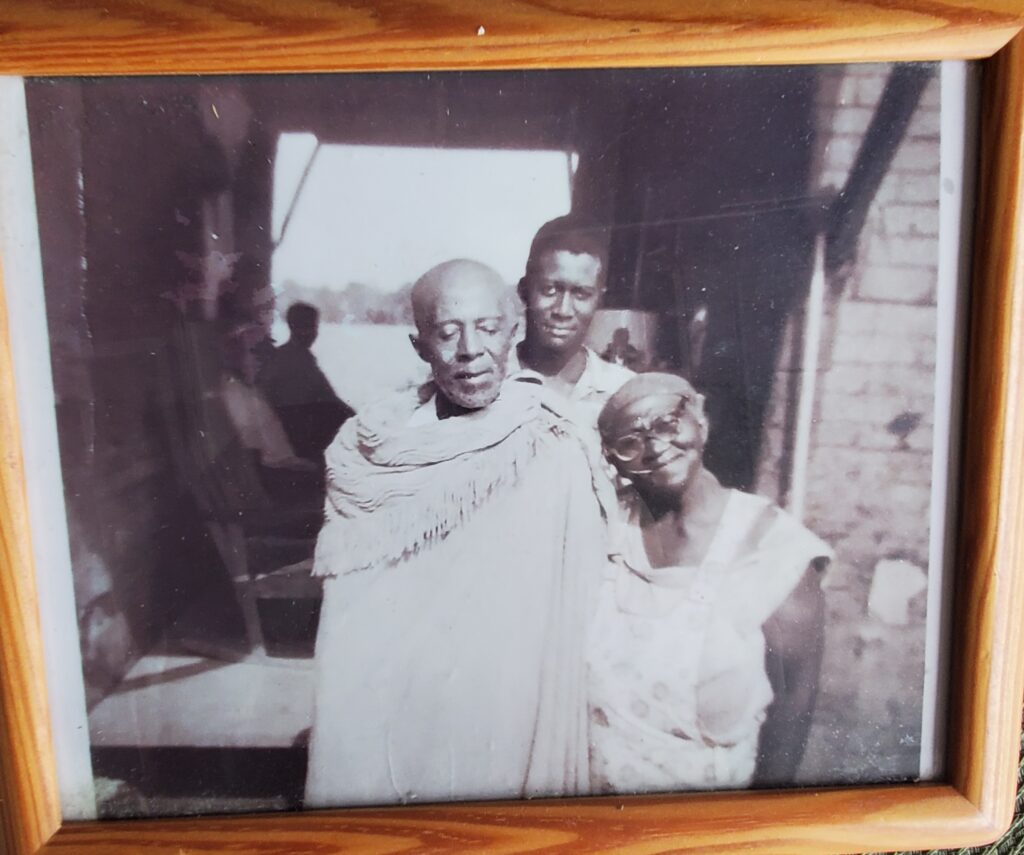
I keep the framed picture of my grandparents and uncle standing in front of that shack as a reminder of how far we’ve come, but know we have a long way to go.
As I prepared for my journey to our ancestral home in West Africa, I anticipated it would be a place of profound sadness; but on the other hand, it would be a place where Black Americans can truly return to the soil of our stolen ancestors. According to our itinerary, we will also be welcomed with “Akwaaba.” We will be welcomed to our ancestral home!
Francie Mae. October 16, 2026